Contractor Website Redesign Guide: Outdated, Slow, Hard to Edit? Here’s When to Make the Switch
A contractor’s website usually does not fail all at once. It slips. First, the photos feel dated. Then the mobile version gets clunky. A customer calls and says, “I couldn’t find your service area.” A team member needs to update a page and gives up because the editor is confusing. Before long, the site that once felt “good enough” starts costing real jobs.
That is the moment most owners start asking whether they need a simple refresh, a full contractor website redesign, or a complete replacement. The right answer depends on what is actually broken, how much growth you want from the site, and how much ongoing website work you want to manage yourself.
I have seen contractors hold onto weak sites for years because they were trying to avoid spending money. I have also seen owners overspend on a custom build they did not need. The better approach is to look at the website like any other business tool. If it helps you get calls, supports your reputation, and can be updated without drama, keep it. If it is dragging down trust, slowing down prospects, or trapping you in a system nobody on your team wants to touch, it is time to move.
The real job of a contractor website
A contractor website does not need to win design awards. It needs to answer a customer’s most urgent questions quickly.
What do you do? Where do you work? Are you legitimate? How do I contact you?
That sounds simple, but many contractor sites miss at least one of those points on the homepage. They lead with vague slogans. They hide the phone number. They bury locations three clicks deep. They use stock photos that could belong to any company in any city. A good site, especially for home service and trade businesses, should get specific fast.
For a home remodeling website design, that means clearly stating the type of remodeling work you do and the areas you serve. For flooring contractor website design, it helps to show the actual systems or finishes you install and the kinds of spaces you work in. For niche services like mold remediation website design or dock builder website design, clarity matters even more because prospects often have high urgency and want confidence right away.
If your homepage cannot communicate those basics in a few seconds, no amount of polishing around the edges will fix the deeper problem.
When a redesign is overdue
Most owners can tell when a site feels old. The trick is knowing whether “old” is a cosmetic issue or a business issue. A redesign becomes worth serious consideration when the site no longer supports how the company operates now.
Here are the clearest signs:
- It looks outdated, is not mobile-friendly, or loads slowly enough to frustrate visitors.
- It is hard to edit, so updates get delayed or never happen.
- It no longer reflects your current services, team, service area, or quality of work.
- It lacks trust elements, such as job photos, clear service pages, or easy contact options.
- It is built on an arrangement where you do not control key accounts, access, or future portability.
That last point gets overlooked all the time. A website is not just design. It is also your domain, hosting, security, backups, update process, and editing access. If you do not know who controls those pieces, or if moving the site later would be messy, you are carrying more risk than most owners realize.
I have talked with contractors who found out too late that their “website guy” registered the domain under a personal account, or that the company had no backup plan if the provider disappeared. Those are not minor technical details. They affect whether your business can keep operating smoothly if the relationship ends.
Why old websites usually hurt more than owners think
The most obvious problem is trust. Homeowners and commercial buyers make snap judgments. If the website feels neglected, they start wondering what else is neglected. That reaction is not always fair, but it is real.
The second problem is lead quality. When service pages are thin or missing, the site attracts broad, low-intent traffic rather than people looking for the exact work you want. A concrete coating website design should not lump every surface treatment into one vague page. An epoxy flooring website design should show specific applications and proof that you know the category. A pool screen enclosure website design should help visitors understand the service quickly, especially if they are comparing multiple companies. The more precise the site is, the easier it becomes for the right prospects to identify themselves.
The third problem is internal friction. If every small update requires an email chain, a bill, and a week of waiting, your website becomes stale by default. Businesses evolve. Service areas shift. Crews add capabilities. Offers change. If the site cannot keep up, it stops representing the real company.
Redesign or replace? There is a difference
Some websites only need a visual refresh and tighter messaging. Others need to be rebuilt from the ground up because the platform, structure, or editing experience is the actual issue.
A redesign makes sense when the foundation is still usable. The site may need better photos, clearer copy, stronger calls to action, or service pages that match what you do today. In that case, keeping the platform and improving the presentation can be enough.
A replacement makes more sense when the site is slow, hard to edit, poorly organized, not mobile-friendly, or tied to a provider arrangement that creates access problems. If the system itself is the bottleneck, redesigning the surface will not solve much.
This is where many owners get stuck. They try to save the old site because it feels cheaper, even when the old setup keeps causing the same problems. It is similar to patching a truck that keeps spending time in the shop. At some point, the repair mindset costs more than switching.
The four common ways contractors buy websites
Most contractors end up choosing from four basic paths. None is universally best. The best fit depends on your budget, timeline, editing needs, and appetite for ongoing maintenance.
- DIY builder. This is the cheapest starting point and can work for a very lean web presence, but it usually demands more of your own time.
- Freelancer. This can be a middle-ground option if you find someone reliable, though support and process can vary a lot.
- Agency. Agencies often offer broader strategy and execution, but the cost is usually higher.
- Managed website subscription. This bundles the site with ongoing hosting, security, backups, updates, and support, which appeals to owners who do not want to manage technical maintenance.
The trade-off is usually some mix of cost, speed, support, and how much responsibility stays on your side after launch.
If you mainly need a credible online presence with a few strong pages, a simpler path may be enough. If you need active lead generation, multiple service pages, service-area pages, or frequent updates, this website paying more for better structure and ongoing support often makes sense.
How much does a contractor website cost?
Owners ask this early, and they should. But the better question is what type of website you are actually buying.
A basic contractor site can be relatively lean if all you need is a homepage, an about page, a services page, a service-area page, and a contact page. Costs rise when you need individual service pages, multiple location pages, copywriting help, trade-specific photography guidance, and regular post-launch updates.
The biggest mistake is comparing quotes without understanding what is included. One provider may give you a low launch price, then bill separately for every future edit. Another may include hosting, security, backups, maintenance, and routine updates in a monthly plan. One is not automatically better than the other, but they are not the same product.
When someone asks, “how much does a contractor website cost,” my honest answer is that the range depends on whether you are buying a simple online brochure or a working lead-generation asset with support behind it. Cheap upfront pricing can get expensive later if every change turns into a ticket and an invoice.
The hidden costs that catch owners off guard
The launch price is only part of the story. The hidden costs are what make some “cheap” websites expensive over time.
Copywriting is a common one. Many contractors underestimate how much work it takes to produce solid service-page content. Then there is hosting, SSL and security, software updates, backups, maintenance, and the simple reality that websites need edits after launch. Team changes happen. Service areas expand. Photos need replacing. New pages get added.
If none of that is included, you need to know what the after-launch process looks like. Who handles edits? How fast? How are they billed? What happens if the site breaks after an update? If the proposal goes quiet on those details, that is not a small omission. It is a warning.
What a strong contractor site should include
Contractor websites do not need a bloated page count to be effective. They do need the right pages and the right proof.
At a minimum, most should have clear trade and location messaging, a services page or separate pages for primary services, an about page, a service-area page, and a contact page. The homepage should make your core offering and service region obvious. The mobile version should be clean and easy to use. Calls to action should be visible without making the whole site feel pushy.
Trade-specific proof matters too. A flooring contractor website design should not rely on generic interiors if you have real project photos. A home remodeling website design should help prospects understand the type of projects you actually want more of. A mold remediation website design should feel reassuring and direct, especially because visitors may be dealing with stress and urgency.
The more specialized the trade, the more important the proof becomes. For example, concrete coating website design and epoxy flooring website design often benefit from showing real surfaces, finish quality, and context around project types. A dock builder website design should look like it belongs to a real marine construction business, not a generic local service template. These details affect trust far more than clever slogans.
Choosing the best website builder for contractors, or deciding not to use one
A lot of owners search for the best website builder for contractors because they assume the platform choice is the main decision. It usually is not.
The better question is who will actually keep the site current and functional. If you enjoy editing content, have time to manage details, and only need a straightforward site, a builder can be fine. If your team is already stretched thin, the “easy” builder often turns into another neglected tool.
This is where a web designer for contractors can add real value, not because designers magically solve everything, but because they can translate business goals into structure, messaging, and usability. The catch is that not every designer understands contractor businesses. A stylish layout is not enough if the site fails to organize services properly or ignores how homeowners and property managers actually shop.
You want someone who gets the basics of local service websites: service pages, location relevance, mobile usability, fast loading, visible contact points, and clear trust signals. Fancy animation is optional. Clarity is not.
Managed website for small business: when the subscription model makes sense
Some owners do not want to think about hosting, security updates, backups, plugin conflicts, or troubleshooting. They want the site live, fast, and supported. For those businesses, a managed website for small business can be a practical option.
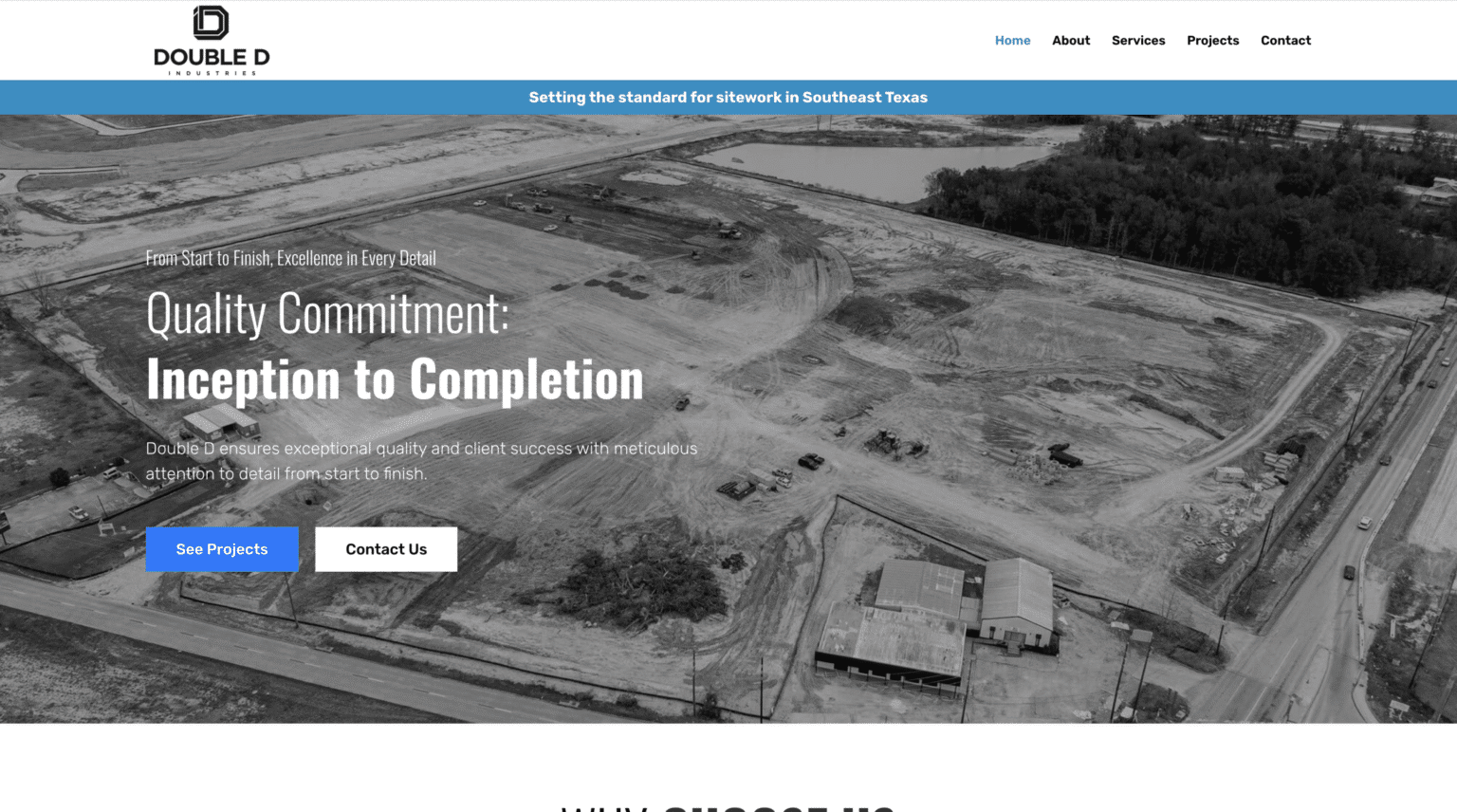
The value of a managed setup is not just design. It is the bundle. Hosting, security, backups, updates, and support live in one place, and the owner is not left coordinating technical tasks alone. That can be especially useful for small contractors who do not have in-house marketing staff.
A managed model is not ideal for everyone. If you want total hands-on control over every technical layer, or you already have a reliable internal team, you may prefer another path. But for many trade businesses, predictable monthly support is easier to budget and easier to live with than one launch payment followed by scattered maintenance costs.
One example in this category is Scalable Websites, a Houston, Texas-based provider that serves contractors nationwide. Their model is a monthly subscription for professionally designed contractor websites with hosting, security, unlimited updates, and a dedicated project manager included, and most sites launch in days. For contractors who want speed and ongoing support without piecing together separate vendors, that type of arrangement can be worth a serious look.
Questions to ask before you sign anything
A website proposal should answer practical business questions, not just talk about design. If those answers are vague, assume the ambiguity will become your problem later.
Ask these before moving forward:
- Will my business own the domain, and will I have access to all key accounts?
- What exactly is included after launch, such as hosting, backups, security, and edits?
- If I need changes later, how are they handled and how quickly?
- Can I move the site or my content if the relationship ends?
- Who is responsible if something breaks after launch or during updates?
That short conversation will tell you a lot. Good providers do not dodge ownership and support questions. They expect them.
A practical way to decide whether now is the right time
If your current site still looks credible, works well on phones, loads reasonably fast, and can be updated without pain, a full contractor website redesign may not be urgent. You may only need better photos, clearer service copy, or a few added pages.
If the site is undermining trust, missing core service information, hard to edit, or built on an arrangement you do not control, delay usually makes the problem more expensive. The cost is not just technical debt. It is lost calls, lower confidence, and a team that avoids touching the site because every change feels like a chore.
One simple test helps: look at your homepage on a phone as if you were a new customer. In the first few seconds, can you tell exactly what the company does, where it works, and how to get in touch? Then click into the key services. Do the pages feel specific and current? If not, the site is probably asking too much of the visitor.
That is when making the switch starts to look less like a marketing expense and more like routine business maintenance.
What a successful redesign usually feels like after launch
The best website projects do not just produce a prettier homepage. They reduce friction.
Your team can request edits without dread. Your services are easier to explain. Your photos and pages match the quality of your actual work. Prospects spend less time guessing whether you handle their project. The site feels like it belongs to the business you have become, not the one you were three years ago.
That matters whether you specialize in pool screen enclosure website design, home remodeling website design, flooring contractor website design, or more niche categories like dock builder website design and mold remediation website design. Different trades need different details, but the goal is the same: make it easy for the right customer to trust you and take the next step.
If your website is outdated, slow, or hard to edit, you do not need to overcomplicate the decision. Start with the business impact. If the site no longer supports the work you want, the service area you cover, or the reputation you have earned, it is time to stop patching and start planning the next version properly.